UR MAG

ShowBiz Celebs Lifestyle

Hot

Saturday, February 7, 2026

Yemen's ruling council names new cabinet after deadly clashes in the south

February 07, 2026
Yemen's ruling council names new cabinet after deadly clashes in the south

CAIRO (AP) — The head of Yemen's ruling leadership council has named a new cabinet, weeks after deadly clashes in the country's south and the dissolution of a separatist group.

Theescalationhas exposed cracks in a Saudi-led coalition fighting Iranian-backed Houthi rebels.

Rashad al-Alimi, head of thePresidential Leadership Council, announced the cabinet in a presidential decree published by the country's state-run SABA news agency late Friday.

The 35-member cabinet is chaired byPrime Minister Shae'a al-Zandani, who also serves as foreign minister. It included only two women: Afrah al-Zouba, minister of planning and international cooperation, and Ahd Jaasous, state minister for women's affairs.

Maj. Gen. Taher al-Aqili was appointed defense minister and Maj. Gen. Ibrahim Haidan will lead the Interior Ministry. Both will oversee Saudi-backed efforts to dismantle militias of the separatist Southern Presidential Council, which is supported by the United Arab Emirates.

Yemen has been mired for more than a decade in a civil war that involves a complex interplay of sectarian and tribal grievances and the involvement of regional powers.

The Iran-aligned Houthis control the most populous regions in the north, including the capital Sanaa. Meanwhile, a loose regional coalition of powers — including Saudi Arabia and the UAE — has backed the internationally recognized government in the south.

The Southern Transitional Council is part of the anti-Houthi camp, but it seeks an independent state in southern Yemen.

In December, STC forces advanced into the provinces ofHadramout and Mahra, where they seized oil-rich areas and facilities and the presidential palace in the main southern city of Aden. They pushed out forces affiliated with the Saudi-supported National Shield Forces, another group aligned with the anti-Houthi coalition.

The Saudi-backed forces have sinceregained control of Hadramout, the presidential palace in Aden andcampsin al-Mahra. The STC then announced itsdissolution.

The escalation in southern Yemen in the past two months has rattled the Saudi-led coalition and brought long-muted tensions between Saudi Arabia and the UAE into the open.Saudi Arabi accused the UAE of supporting the separatists, and smuggling the STC leader, Aidarous al-Zubaidi, who is wanted for treason, out of Yemen and flying him to Abu Dhabi.

The Saudi-led coalition, which until recently had included the UAE, has fought to restore Yemen's government. The war has remained at a stalemate, and the rebels reached a deal with Saudi Arabia that stopped their attacks on the kingdom in return for an end to Saudi-led strikes on their territories.

Read More

How Iowa farmers fed German prisoners and found common ground in WWII

February 07, 2026
How Iowa farmers fed German prisoners and found common ground in WWII

Jean Shey was 12 when she first questioned her father's judgment.

USA TODAY

He wanted to serve lunch to the Germans. Not neighbors — prisoners of war in her town of Algona.

Five of them. Men captured overseas while her friends' brothers were fighting and dying in Europe.

"Dad, you're inviting those monsters into our home?" she asked in disbelief.

More:At Iowa's Camp Clarinda, fear defined life for Japanese prisoners of war

Her father never hesitated.

"They're just like us," he told her.

Shey, now 93, still remembers those words, and her mother's reply.

"Mom said, 'Well, I'm definitely not going to use my good dishes.'"

In the middle of World War II, the deadliest conflict in human history, in a county struggling to meet federal food quotas with fewer men and limited machinery, the Shey family farm near Algona, Iowa, became one of many places where the lines blurred between enemy and neighbor.

Jean Shey was 12 years old when her father brought German prisoners of war home for meals while they worked on the farm, an experience that would shape her understanding of the war and its aftermath.

More than 25,000 enemy prisoners of war were transported to Iowa from 1943 to 1946, more than any state except Texas and California.

Most of the prisoners Iowa received were German soldiers captured with the Afrika Korps in North Africa and transported across the Atlantic on gray-painted ocean liners before continuing inland by rail.

Shey remembered lining up to see the prisoners as they stepped off the Pullman railcars and into the heartland of America, their uniforms marked with distinctive large letters stitched onto their backs and chests: PW.

The Geneva Convention barred prisoners from being used for direct war labor. But Iowa's fields still needed planting and harvesting.

Corn had to be cut. Oats shocked. Sugar beets and potatoes pulled from the ground.

Across the state, farms were stripped of labor by conscription and wartime industry. Machinery was scarce. Kossuth County's 4,245 farm families struggled to increase production.

A group of POWs pose amid a harvested hemp field in Britt, Iowa, after a day’s labor.

In August 1942, the Algona Upper Des Moines warned, "It begins to look like the Army boys may have to fight on empty stomachs."

The War Department got creative. It asked the U.S. Department of Agriculture to identify secure inland sites where prisoners of war could be housed and put to work without competing with free local labor.

Algona met the criteria, and Camp Algona opened in April 1944.A second major Iowa camp also was erected in Clarinda.

German POWs drove tractors, harvested seed corn and processed hemp for rope. They were paid 80 cents per day in camp credit, enough for cigarettes and a Hershey chocolate bar.

The labor program functioned as intended. But inside that system, historians and those who lived it say, something else ripened in a way unlike anywhere else: community.

Skepticism comes first

Don Tietz was an 8 year-old boy when the camp went up in Algona.

Before the prisoners rolled into the rural north-central Iowa town, Tietz, now 89, said the war was something you could only hear or watch.

It came through the radio. It showed up in grainy newsreels: Adolf Hitler shouting, veins bulging, fists clenched, rage flowing.

"The world was scary, no doubt about that," he said. "We'd go to a movie theater and see Hitler. It was scary when he talked. He was just raging mad with anger."

Don Tietz was a child living near Algona when Camp Algona opened. Decades later, he became one of the primary witnesses recounting how German prisoners of war were integrated into daily farm life in north-central Iowa.

Those images were reinforced by government-curated media and years of escalating violence abroad.

Hitler's invasion of Poland in 1939 ignited a European war the United States initially watched from afar, and American policy remained largely isolationist even as reports of mass killings spread.

Tietz said he still remembers the day that distance collapsed: Dec. 7, 1941, when Japanese forces attacked Pearl Harbor and pulled the United States fully into World War II.

By 1942, Iowa families had sons and brothers serving overseas, and the war effort meant producing more at home with fewer workers.

When word spread that a prisoner of war camp would be built near Algona, fear that had lived on screens and in headlines took a new, local form.

According to Mark Davis, vice president of the Camp Algona POW Museum board, residents were openly anxious before the first prisoners arrived.

"There was a lot of fear in Algona about this camp being here," Davis said. "Before the prisoners even arrived, they had public meetings and stuff trying to assuage people's fear about the prisoners."

The main entrance to Camp Algona, one of the largest POW camps in the Midwest.

Historian Chad Timm, a Simpson College professor whose Iowa State University thesis was one of the first to merge the history of Iowa camps together, said resident fears reflected a broader pattern of how war is understood when the enemy is defined mostly through propaganda and secondhand accounts.

"We have ideas about who the enemy is, and we define the enemy, and we fear the enemy, and we create ideas about the enemy in our minds," Timm said. "When Iowans found out that the Germans were coming, they were nervous and apprehensive and really concerned. There were letters to the editor, even from abroad, that were critical of the camp."

On the Tietz family farm, though, there was no backup plan. Housing prisoners of war in Algona offered one of the few ways the thousands of nearby farms could meet federal food quotas.

He said his father was one of the first farmers to go to the camp and ask for labor.

"There was just no help available, and our farm equipment was very basic. We had no electricity, no running water, we picked the corn and husked it by hand," Tietz said. "We needed all the help we could get."

And the fear ran both directions, Tietz said.

"The prisoners on the shuttles would get scared, thinking that the enemy was going to open fire on the shuttle," Tietz said. "The guards would say, 'No, you're in the United States. The war is not here.'"

An American officer oversees German POW labor using horse-drawn wagons on an Iowa farm.

A town — and a camp — that adapted

Once the prisoners began arriving, daily life around Camp Algona settled into a routine that few residents would have predicted during those early public meetings.

Each morning, German prisoners were moved out in work details bound for farms, canneries and processing facilities across north-central Iowa. Some were transported by military trucks.

Others were picked up directly by farmers, who signed them out and returned them at the end of the day. Guards were present, but often minimally so.

"The guard never went out into the field where they were working," Shey said. "He sat under the tree in the yard, where there was a lot of grass, and enjoyed the quietness. I think he took some naps."

Historians say that, unlike POWs assigned to factories in other states and larger cities, the men working out of Camp Algona spent their days on family farms, often alongside children and women who had taken on expanded roles during the war.

"Because the nature of the work they were doing here in the Midwest was so agricultural, and many of these farms at the time were family farms, there was a lot of contact between German POWs and Iowans," said Kelsey Kramer McGinnis, a musicologist whose research has examined daily life at Camp Algona.

Language eased that contact. Northern Iowa was home to many families of German descent, and while public use of German had largely been suppressed after World War I, older generations still spoke it.

Many of the prisoners were farm boys themselves, too, drafted into the German army.

Advertisement

"They were strong men," Davis said of the early arrivals from the Afrika Korps. "They had been captured early in the war and brought here because England couldn't feed them anymore."

Trust developed quickly in some places. Prisoners ate meals at farm tables. Children were left alone with them. In a few cases, prisoners wandered away and returned on their own.

"One story that the folks at Algona love to tell is that, one time as a prank, a couple of POWs escaped and then just, like, came back, just to kind of prove that they could," McGinnis said.

Prisoners of war bake bread inside Camp Algona, April 11, 1944.

The low security environment was partly the result of geography.

"The Midwest is vast," McGinnis said. "They would not get far and would not be able to do much."

Inside the camp, life expanded beyond work. Under the Geneva Convention, prisoners had to be provided opportunities for recreation and cultural activity. Camp Algona became a place of constant movement between the military installation and the surrounding community.

"These POW camps, especially the big ones, had things like instrument collections, record collections," McGinnis said. "You have the Red Cross and the YMCA coming in asking what books and instruments and records were needed, and trying to make life livable and even sometimes enjoyable as possible."

Music became one of the most visible points of exchange, she said. German prisoners organized choirs, orchestras and ensembles. They performed German music openly, something that had not only grown increasingly rare in post-World War I Iowa, but also in Germany itself, where the Nazi regime tightly controlled cultural expression.

POWs stage a full theatrical production with sets, costumes, and a live orchestra at Camp Algona.

Local residents were allowed into the camp for church services and performances. Prisoners attended services led with community participation.

The camp also brought a wartime economic boon to rural Algona.

According to records from Camp Algona's commanding officer, Lt. Col. Arthur Lobdell, the value of labor to those hiring prisoners totaled more than $3.5 million, worth over $62 million today. Lobdell estimated the wholesale value of food and other products handled by POW labor at $101 million, worth over $1.8 billion today.

Shared humanity prevailed

Inside that system, perceptions shifted, Timm said.

In his research, he highlights how Iowa was not only a place where civilians and prisoners interacted, but where those interactions often extended beyond the worksite and into the most intimate spaces.

He described Iowa's experience as one end of a national spectrum. In other states, he said, prisoners often faced far harsher conditions.

"There were POWs in some states who were shot and killed trying to escape and then there were POWs like in Iowa, who sat at the same dinner table and ate meals with Iowa farmers," he said.

Shey remembers her family's dinner table as the place where that difference was clear. At noon, she said, the prisoners came inside for fried chicken, potatoes and dessert.

It was there, she said, that she realized the men "were not monsters. They were very nice, and they were polite."

A German POW pours Idaho potatoes onto a sorting table inside a processing facility at Camp Algona.

Even decades later, she still returns to one detail.

"This one older man, when he got through eating, he would sit up really straight and he would take both hands and make a fist out of them and pound on his stomach all the way across the front of him," she said. "And I wondered what in the world was going on. 'Well,' he said, 'you know that food was so good, I'm trying to decide if I could eat more.'"

Timm said the repeated contact forced residents to hold two realities at once: What they were told about the German military and what they were seeing in front of them.

"Iowans looking into the eyes of German soldiers and seeing their brothers and their uncles and their relatives who were fighting overseas and realizing that they're human beings," he said, "they realized that the enemy were humans."

The most visible artifact of that cultural life is the nativity scene built at Camp Algona. Assembled over several months and paid for by the prisoners themselves, it remains on display at the Camp Algona POW Museum.

German POW Eduard Kaib, who led the Camp Algona's Nativity Scene project, holds some of the hand-sculpted nativity figures.

Brian Connick, the museum's director, said it was built for roughly $8,000 in 1945 dollars, worth over $143,000 in today's value, drawn from prisoners' daily earnings of 80 cents.

"That first night, Christmas Eve of 1945, I think that would have been quite a scene to be there and sharing that with, in essence, your enemy during that war," Connick said. "Certainly, it was something that brought people together, and it's still bringing people together 80 years later."

He described the response in Algona not as a single act of goodwill, but as a series of choices made in everyday settings.

"The people of Iowa, and specifically Algona, chose to treat these people as human beings. They didn't have to go that way," he said. "The easy thing would be not to treat them right or not to treat them well. But I think people here did the right thing."

Tietz said he saw that choice play out in real time.

"There was a bond, a bond of friendship and trust," he said. "We viewed the prisoners as our relatives from Germany."

Connections that lasted for generations

When the war ended, the German men who had hoed Iowa fields and eaten at local dinner tables were sent back across the Atlantic to famine conditions and ruins.

Shey said her father made a promise before the prisoners left: "He said 'now, if you need anything when you get back to Germany, you let me know, and I will try to get whatever you need.'"

Now in her 90s, Jean Shey recalls hosting German prisoners of war at her family’s dinner table and maintaining contact with one former prisoner for decades after the war ended.

When letters arrived, Shey said, her father responded with a level of compassion she had never seen from him before.

"He didn't have Mom help him at all," Shey said. "He said, 'I'll just take care of it. I'll send what I think they will need.' He had a special bond with these prisoners."

That impulse — to help first, regardless of who the person is — is what Tietz said stayed with him long after the camp closed.

"I don't know what causes people to go bad," Tietz said. "Hitler was a bad person. He was a bad, bad man. And if we don't learn from history, we become victims of its mistakes."

Those lessons feel especially urgent now, he said.

"We are a divided country right now," he said. "We are a state (and) we're a country of immigrants, and we forget that every day."

Don Tietz, now in his late 80s, has spent years speaking publicly about Camp Algona and the relationships that formed between Iowa families and German prisoners of war during World War II.

Years after the war, former prisoners told Shey's family their time in Algona had stayed with them.

For the Shey family, that connection centered on one man: Wilhelm. He spoke the most English, helped lead the small group of prisoners working the farm and stayed in closest contact after returning to Germany.

His family was starving. There was a newborn at home. Shey's father understood what they needed, and what they missed the most.

"Grandpa sent baby clothes over for his newborn son, Thomas, and we think he probably sent Mom's baby clothes," said Jane Shey, Jean's daughter.

When the packages arrived, Jean Shey was told, Wilhelm's wife opened one right there at the post office.

"At the top was a Hershey candy bar," Shey said. "And she grabbed it and just almost inhaled it."

German prisoners of war pose beside small Christmas trees outside a rural Iowa branch camp building.

Years later, Shey said, they found themselves in Germany, hoping the door they were about to knock on belonged to Wilhelm.

When it opened, he was standing there, in dress pants and a sports coat.

"He leapt at me and gave me a hug, and said something I'll never forget," she said.

"My little Jean," he said, as they both cried at the door.

Nick El Hajj is a reporter at the Register. He can be reached atnelhajj@gannett.com.Follow him on X at @nick_el_hajj.

This article originally appeared on Des Moines Register:Iowa farmers and German prisoners of war built friendships during WWII

Read More

Sick of the polar vortex? Here's when warmer weather will arrive.

February 07, 2026
Sick of the polar vortex? Here's when warmer weather will arrive.

Could early February's blast of cold in the northeastern United States be one of the last appearances of our wintertime foe,the polar vortex?

USA TODAY

While forecasters can't yet say that for sure, a warmer stretch of weather appears likely for much of the nation: According to aforecast from AccuWeather, a gradual moderation in temperatures is expected to develop during the second week of February across the Midwest and eastern United States.

However, while conditions will turn less cold, lingering snow and ice will slow the warming process and keep winter-related risks in place, AccuWeather said.

<p style=Snow covers the ground in northwest Oklahoma City, Sunday, Jan. 25, 2026. These photos captured the winter storm's aftermath from the sky.

" style="max-width:100%; height:auto; border-radius:6px; margin:10px 0;" loading="lazy" /> A person shovels snow off their driveway covers in northwest Oklahoma City, Sunday, Jan. 25, 2026. A section of West 42nd Street remains snow covered Monday, Jan. 26, 2026, in Indianapolis. Snow blankets the city Monday, Jan. 26, 2026, as motorists travel along Interstate 65 and West 38th Street in Indianapolis. An aerial photo shows the University of Missouri sitting under several inches of fresh snow on Jan. 25, 2026 in Columbia, MO. An aerial photo shows several inches of fresh snow covering a residential neighborhood on Jan. 25, 2026 in Columbia, MO. Snow covers downtown after a winter storm in Oklahoma City, on Sunday, Jan. 25, 2026. People play in snow after a winter storm in northwest Oklahoma City, Sunday, Jan. 25, 2026. Downtown Louisville and snowy interstate conditions are seen on Jan. 25, 2026 in Louisville, Kentucky. Downtown Louisville and snowy interstate conditions are seen on Jan. 25, 2026. Snow covers the ground in northwest Oklahoma City, Sunday, Jan. 25, 2026.

Mesmerizing drone photos taken after winter storm show power of nature

Snow covers the ground in northwest Oklahoma City, Sunday, Jan. 25, 2026. These photos captured thewinter storm's aftermathfrom the sky.

Is a strong polar vortex good news?

Keep in mind that a stronger polar vortex is good news for warm weather lovers in the U.S. When it's strong, the vortex and its cold air usually stay bottled up over the Arctic where they belong. When the polar vortex weakens, it often allows unspeakably cold air to funnel south into the U.S.

"As the polar vortex strengthens next week, the jet stream will become strong, but in a general west-to-east setup over the U.S. and southern Canada," AccuWeather senior meteorologist Brett Anderson said in anonline forecast.

"As this happens, Pacific air will tend to flow across the U.S., and the air will end up being much less cold than recent weeks in the central and eastern states," Anderson said.

Temperatures between Feb. 11-15, 2026, should be above average across much of the United States east of the Rockies.

How warm will it get?

According toNOAA's Weather Prediction Center (WPC),well above normal temperatures are expected from the interior West to the central and eastern United States the week of Feb. 9.

"The Plains will see the greatest anomalies of 20-30 degrees above normal for early February, locally even higher," the WPC said in anonline forecast. "This puts highs in the 60s well north into Montana and South Dakota Monday Feb. 9 and Tuesday Feb. 10."

Advertisement

Temperatures may moderate some as the week progresses, but will still generally be at or slightly above normal, theWPC said. "Warmer than average temperatures will also expand across the South to the Southeast and into portions of the Mid-Atlantic," the forecast said.

According toAccuWeather, people in the Midwest and Northeast who have acclimated to highs in the single digits, teens and 20s may find that highs in the 30s, 40s and near 50 degrees Fahrenheit will feel like spring has arrived early.

More:Polar vortex sending Arctic air to US. Where will be coldest?

Any relief coming to the beleaguered Northeast?

The short answer is, "Yes, somewhat," according toWeather.com meteorologist Jonathan Erdman. "We do expect temperatures to rise above freezing in much of the Interstate 95 corridor by Tuesday (Feb. 10)," he said in an online forecast.

"But, in general, the warm-up in the Northeast will be relatively muted compared to the rest of the South and central U.S. during the week."

Gradual warming would be best

"Given the amount of ice on area streams and rivers, the last thing anyone would want is a massive warmup with heavy rain all at once," saidAccuWeather senior meteorologist Alex Sosnowski in an online forecast. "Such a condition in January 1996 resulted in major ice jams and river flooding as the snow cover melted in a matter of hours.

"The upcoming thaw looks to be more gradual and less intense than in 1996 — for now."

This article originally appeared on USA TODAY:February forecast says polar vortex on the way out (for now)

Read More

Winter Olympics schedule today: Every event happening on Feb. 7

February 07, 2026
Winter Olympics schedule today: Every event happening on Feb. 7

Here is the 2026 Milano Cortina Winter Olympics competition schedule for Saturday, Feb. 7. The games are exclusively airing across NBC's suite of networks with many competitions airing live on its streaming service, Peacock, which you cansign up for here.

USA TODAY Sports

USA TODAY Sports has a team of more than a dozen journalists on the ground in Italy to bring you behind the scenes with Team USA and keep you up to date with every medal win, big moment and triumphant finish. Get ourChasing Gold newsletterin your inbox every morning andjoin our WhatsApp channelto get the latest updates right in your texts.

Feb. 7 Winter Olympics events

All times Eastern and accurate as of Friday, Feb. 6, 2026, at 3:20 p.m.

Advertisement

  • 4:05 a.m. - Curling: Mixed Doubles Round Robin - GBR vs. CAN, Cortina Curling Olympic Stadium (Cortina d'Ampezzo)

  • 4:05 a.m. - Curling: Mixed Doubles Round Robin - SWE vs. SUI, Cortina Curling Olympic Stadium (Cortina d'Ampezzo)

  • 4:30 a.m. - Freestyle Skiing: Women's Freeski Slopestyle Qualification, Livigno Snow Park (Livigno, Valtellina)

  • 5:30 a.m. - Alpine Skiing: Men's Downhill (Medal Event), Stelvio Ski Centre (Bormio, Valtellina)

  • 5:30 a.m. - Alpine Skiing: Women's Downhill 3rd Official Training, Tofane Alpine Skiing Centre (Cortina d'Ampezzo)

  • 6:10 a.m. - Ice Hockey: Women's Preliminary (GER vs. JPN), Milano Rho Ice Hockey Arena

  • 7 a.m. - Cross-Country Skiing: Women's 10km + 10 km Skiathlon (Medal Event), Tesero Cross-Country Skiing Stadium (Val di Fiemme)

  • 7:30 a.m. - Luge: Women's Singles Official Training 3 & 4, Cortina Sliding Centre (Cortina d'Ampezzo)

  • 8 a.m. - Freestyle Skiing: Men's Freeski Slopestyle Qualification, Livigno Snow Park (Livigno, Valtellina)

  • 8:35 a.m. - Curling: Mixed Doubles Round Robin - EST vs. NOR, Cortina Curling Olympic Stadium (Cortina d'Ampezzo)

  • 8:35 a.m. - Curling: Mixed Doubles Round Robin - CZE vs. KOR, Cortina Curling Olympic Stadium (Cortina d'Ampezzo)

  • 8:35 a.m. - Curling: Mixed Doubles Round Robin - SWE vs. ITA, Cortina Curling Olympic Stadium (Cortina d'Ampezzo)

  • 8:35 a.m. - Curling: Mixed Doubles Round Robin - GBR vs. USA, Cortina Curling Olympic Stadium (Cortina d'Ampezzo)

  • 8:40 a.m. - Ice Hockey: Women's Preliminary (SWE vs. ITA), Milano Santagiulia Ice Hockey Arena

  • 10 a.m. - Speed Skating: Women's 3000m (Medal Event), Milano Speed Skating Stadium (Rho, Milan)

  • 10:40 a.m. - Ice Hockey: Women's Preliminary (USA vs. FIN), Milano Rho Ice Hockey Arena

  • 11 a.m. - Luge: Men's Singles Runs 1 & 2, Cortina Sliding Centre (Cortina d'Ampezzo)

  • 11:45 a.m. - Ski Jumping: Women's Normal Hill Individual - Trial Round, Predazzo Ski Jumping Stadium (Val di Fiemme)

  • 12:45 a.m. - Ski Jumping: Women's Normal Hill Individual - First Round, Predazzo Ski Jumping Stadium (Val di Fiemme)

  • 1:05 p.m. - Curling: Mixed Doubles Round Robin - CAN vs. EST, Cortina Curling Olympic Stadium (Cortina d'Ampezzo)

  • 1:05 p.m. - Curling: Mixed Doubles Round Robin - CZE vs. SUI, Cortina Curling Olympic Stadium (Cortina d'Ampezzo)

  • 1:05 p.m. - Curling: Mixed Doubles Round Robin - NOR vs. ITA, Cortina Curling Olympic Stadium (Cortina d'Ampezzo)

  • 1:05 p.m. - Curling: Mixed Doubles Round Robin - USA vs. KOR, Cortina Curling Olympic Stadium (Cortina d'Ampezzo)

  • 1:30 p.m. - Snowboarding: Men's Big Air Final (Medal Event), Livigno Snow Park (Livigno, Valtellina)

  • 1:45 p.m. - Figure Skating: Team Event - Ice Dance, Milano Ice Skating Arena (Milan)

  • 3:10 p.m. - Ice Hockey: Women's Preliminary (SUI vs. CAN), Milano Rho Ice Hockey Arena

  • 4:05 p.m. - Figure Skating: Team Event - Ice Dance, Milano Ice Skating Arena (Milan)

Meet Team USA 2026:Get to know the athletes behind the games

More 2026 Winter Olympics

See the full Milano Cortina Games schedule

See the 2026 Medal Count Here

This article originally appeared on USA TODAY:Winter Olympics schedule today: Every event happening on Feb. 7

Read More

Winter Olympics: What to watch today in Milan Cortina (2/7)

February 07, 2026
Winter Olympics: What to watch today in Milan Cortina (2/7)

The Winter Games have begun in Italy. From the rink to the slopes, a new generation of stars has emerged to chase gold. We'll keep you connected to all of the thrilling moments and top stories as we track the medal race each day of the Games.

Yahoo Sports

The U.S. women's hockey, mixed doubles curling and ice dance teams will look to continue their dominant early showing, while eyes will be on Lindsey Vonn to see if she does another training run before Sunday's Olympic women's downhill competition.

Here are the top five things to watch Saturday at the 2026 Milan Cortina Olympics:

1. Medals

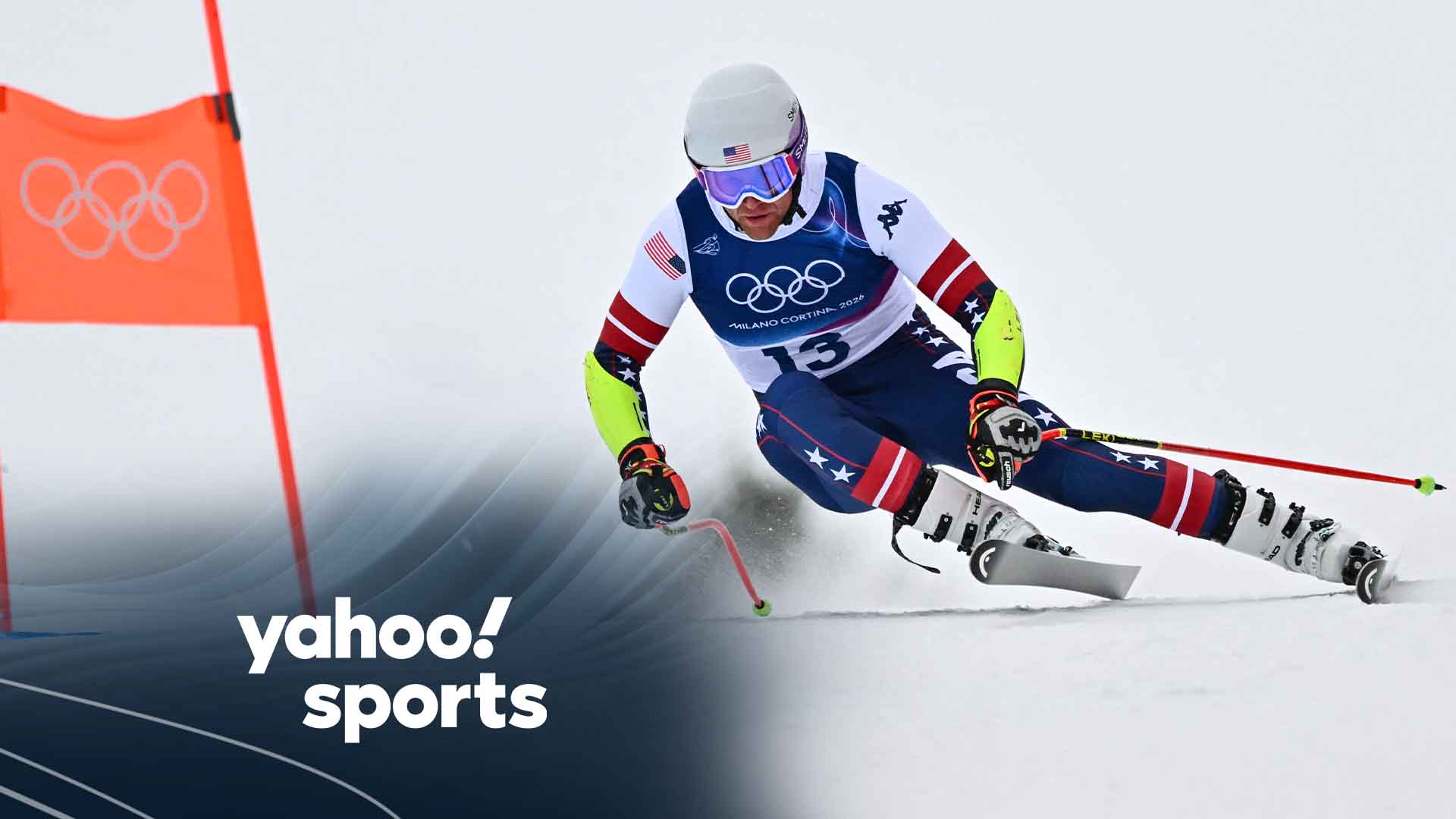
Medals will begin to be handed out Saturday morning. The first medal events are men's downhill skiing and the women's 20 km skiathlon. There will also be medals awarded for women's 3000m speed skating, men's big air snowboarding and women's normal hill ski jumping.

2.Lindsey Vonn training run?

After participating in Friday's training run, Lindsey Vonn's coach, Aksel Lund Svindal, said he was not sure if Vonn would participate in Saturday's training run, but she is on the list of starters. This will be her second chance after the cancelation of the first training on Thursday.

A week after tearing her ACL during the upper sectionof the World Cup downhill race in Switzerland,Vonn completed a successful training runearly Friday morning. The run was required if she wanted to compete in Sunday's Olympic women's downhill competition. Vonn clocked in at 1:40.33, a time that placed her 11th out of the 43 finishers.

The 41-year-old is a four-time overall World Cup champion and won gold in the downhill event at the 2010 Olympics. Vonn made a return after retiring from skiing in 2019.

3. U.S. women's hockey set to face illness-stricken Finland

The U.S. women's hockey team meets Finland in its second game of the 2026 Olympics. The U.S. opened the Olympics with a5-1 win over Czechia. Finland has yet to play after their opening game against Canada was postponed until Thursday aftera norovirus outbreak.

Norovirus, according to the Centers for Disease Control, is a "very contagious" illness that is the leading cause of vomiting and diarrhea in the United States. Most people with norovirus illness recover in 72 hours or less, the CDC says, but they can still spread the virus for several more days afterward.

The Finnish team is reportedly optimistic about playing after most of the team took part in practice. The Americans, meanwhile, have taken precautions to protect themselves from catching the virus.

USA's Korey Dropkin (left) and Cory Thiesse in action during the Curling Mixed Doubles Round Robin match against Canada at the Cortina Curling Olympic Stadium, Italy. Picture date: Friday February 6, 2026. (Photo by Andrew Milligan/PA Images via Getty Images)

4. Can U.S. mixed doubles curling team stay undefeated?

The U.S. mixed doubles curling team is off to arecord-setting, undefeated start after two days of competition with wins over Canada and Czechiaon Friday. Cory Thiesse and Korey Dropkin's 4-0 start was the best among any U.S. men's, women's or mixed doubles curling team since the sport was added to the Olympics in 1998.

On Saturday, it will be a challenge to stay undefeated as they take on 5-0 Great Britain and 0-4 South Korea in round-robin play.

Advertisement

5. Free dance, men's short program in team figure skating

Team USA will enter the day with the lead in the team competition after strong performances Friday from Madison Chock and Evan Bates in the rhythm dance and reigning world championAlysa Liuin the women's short program. Team Japan sits just two points behind the U.S. in second place after Kaori Sakamoto's strong short program.

Saturday, Feb. 7, 2026

All times ET.

Alpine Skiing

  • 5:30 a.m.: Men's final (USA Network)🏅

Cross-Country Skiing

20 kilometer skiathlon

  • 7 a.m.: Women's final (NBC)🏅

Curling

Mixed doubles round-robin

  • 4:05 a.m.: Great Britain vs. Canada (USA Network), Switzerland vs. Sweden

  • 8:35 a.m.: Estonia vs. Norway, Czechia vs. South Korea, Sweden vs. Italy, Great Britain vs. USA (USA Network at 9:30 a.m.)

  • 1:05 p.m.: South Korea vs. USA, Canada vs. Estonia, Czechia vs. Switzerland, Norway vs. Italy

Figure Skating

Team competition

  • 1:45 p.m.: Men's short program (NBC)

  • 4 p.m.: Free dance (NBC)

Freestyle Skiing

  • 4:30 a.m.: Women's qualifying (USA Network; NBC picks up coverage at 5:30 a.m.)

  • 8 a.m.: Men's qualifying (NBC)

Hockey

Women's pool play

  • 6:10 a.m: Germany vs. Japan

  • 8:40 a.m.: Sweden vs. Italy

  • 10:40 a.m.: USA vs. Finland (USA Network)

  • 3:10 p.m.: Switzerland vs. Canada (USA Network)

Luge

Men's singles

  • 11 a.m.: Runs 1, 2 (Run 2 airs live on NBC beginning at 12:45 p.m.)

Ski Jumping

Normal hill

  • 11:45 a.m.: Women's final (airs on USA Network at 8 p.m.)🏅

Snowboarding

  • 1:30 p.m.: Men's final (USA Network) 🏅

Speed Skating

3000 meters

  • 10 a.m.: Women's final (NBC coverage begins at 10:05 a.m.) 🏅

Read More